Before chasing a forklift fault, collect enough reliable context to make the next qualified review useful: machine identity, the reported symptom, the exact displayed message, operating conditions, recent work and what has already been checked. Keep unknowns visible. This intake is a communication tool, not a repair procedure.
A hurried message often compresses several different things into one sentence. “Transmission bad again” may combine an operator’s description, a prior repair and someone’s hypothesis. A good intake separates them before they enter a job record or parts request.
Identify the actual machine
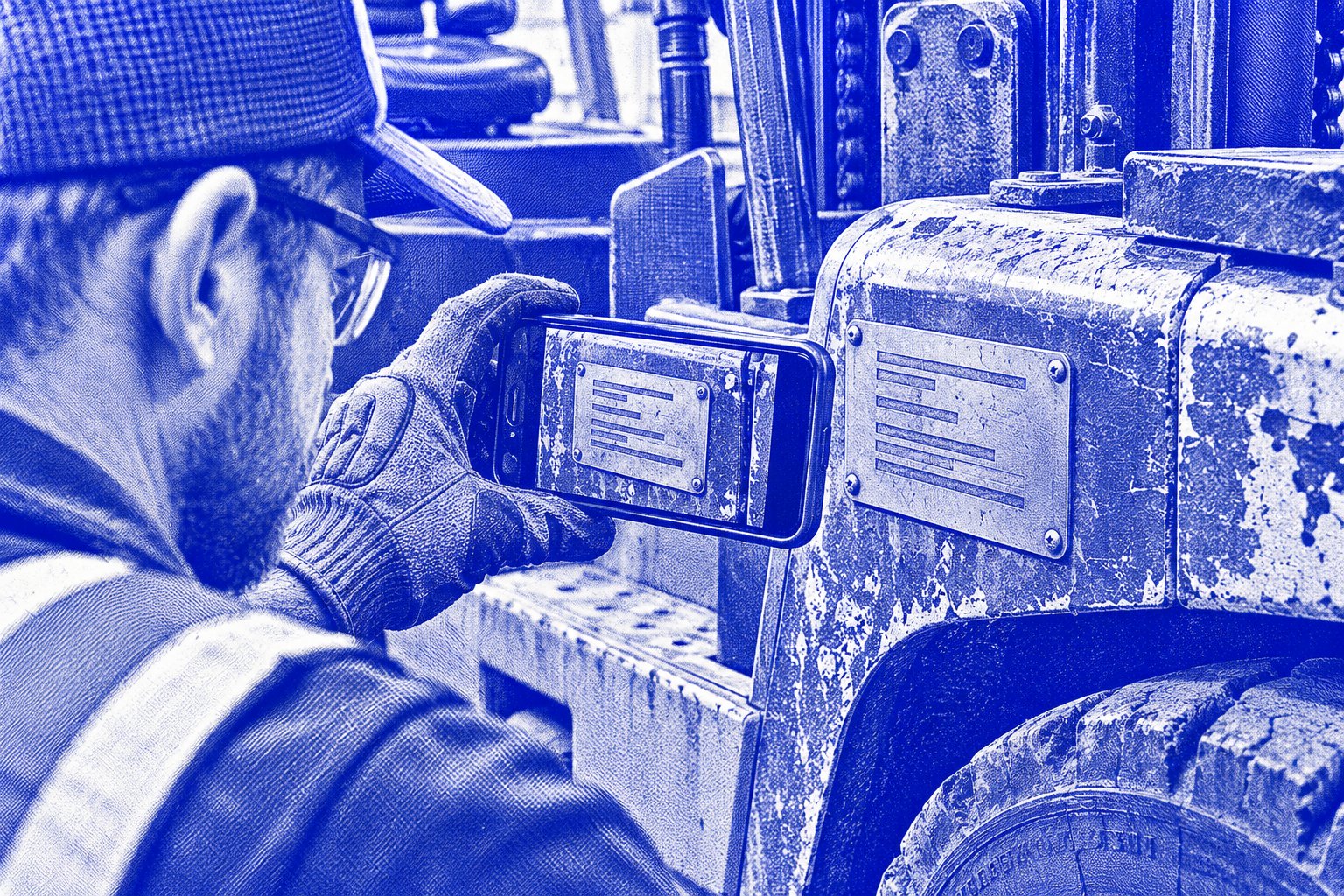
Record the make, full model designation and serial number or authorized serial range, together with the site’s unit identifier. Note the power type and relevant installed configuration. Photograph the data plate only when you have permission and can avoid exposing unrelated customer information.
Toyota’s parts guidance emphasizes the model and serial combination when matching equipment. The broader practical lesson is to preserve both fields rather than assuming a model name alone identifies every installed variant. A supplier or applicable manufacturer source should resolve ambiguity.
Do not guess unreadable characters. Mark the uncertain part of the identifier and ask for a clearer authorized record. If two machines share a site nickname, resolve that before combining their service histories.
Capture the complaint in plain language
Write what happened, who observed it and when. Preserve the exact displayed code or message as shown, including punctuation and prefixes. Do not translate a code into a diagnosis unless an applicable source and qualified reviewer support that meaning.
Useful timing details can include whether the issue was first reported at startup, after warming up, during a particular function or under a described condition. Record the circumstances without directing anyone to recreate an unsafe event. A short, accurate description is better than a long speculative narrative.
Keep recent work distinct from evidence
List the date and scope of recent service, parts replaced and reported result. Identify which information comes from a technician’s signed record and which comes from a customer’s recollection. A replaced component is evidence of work performed, not proof that the original diagnosis was correct.
For checks already performed, record the method and result only to the level appropriate for the authorized job record. Do not convert “looked okay” into a verified measurement. If the method is unknown, mark it unknown so the next reviewer can decide whether it is usable.
Record source identity and permission
Include the document title, revision, applicable model or serial range and the section relevant to the question. A link to an authorized source can be safer and more useful than distributing a complete private manual.
The assistant should distinguish “source supplied” from “source reviewed and applicable.” A document with a familiar manufacturer name may still be the wrong edition or configuration. Access to the file also does not automatically confer permission to redistribute it to another vendor or model provider.
Use a short intake structure
- Machine: make, model, serial context, power type, site unit ID.
- Report: symptom in the observer’s own words and who reported it.
- Display: exact code or message; no invented interpretation.
- Circumstances: timing and relevant conditions, without unsafe reproduction.
- History: recent work, dates, replacements and reported outcomes.
- Existing checks: method, result, source and reviewer where known.
- Reference: authorized document, revision and applicability status.
- Next owner: qualified reviewer, unresolved questions and follow-up.
This structure should fit into the job workflow. It does not need to become a long form that delays an urgent safety escalation.
A useful intake has fewer missing pieces.
A fictional before-and-after handoff
Weak version: “Lift cuts out. Replaced something last week. Need another part.” This lacks identity, source and a verified finding.
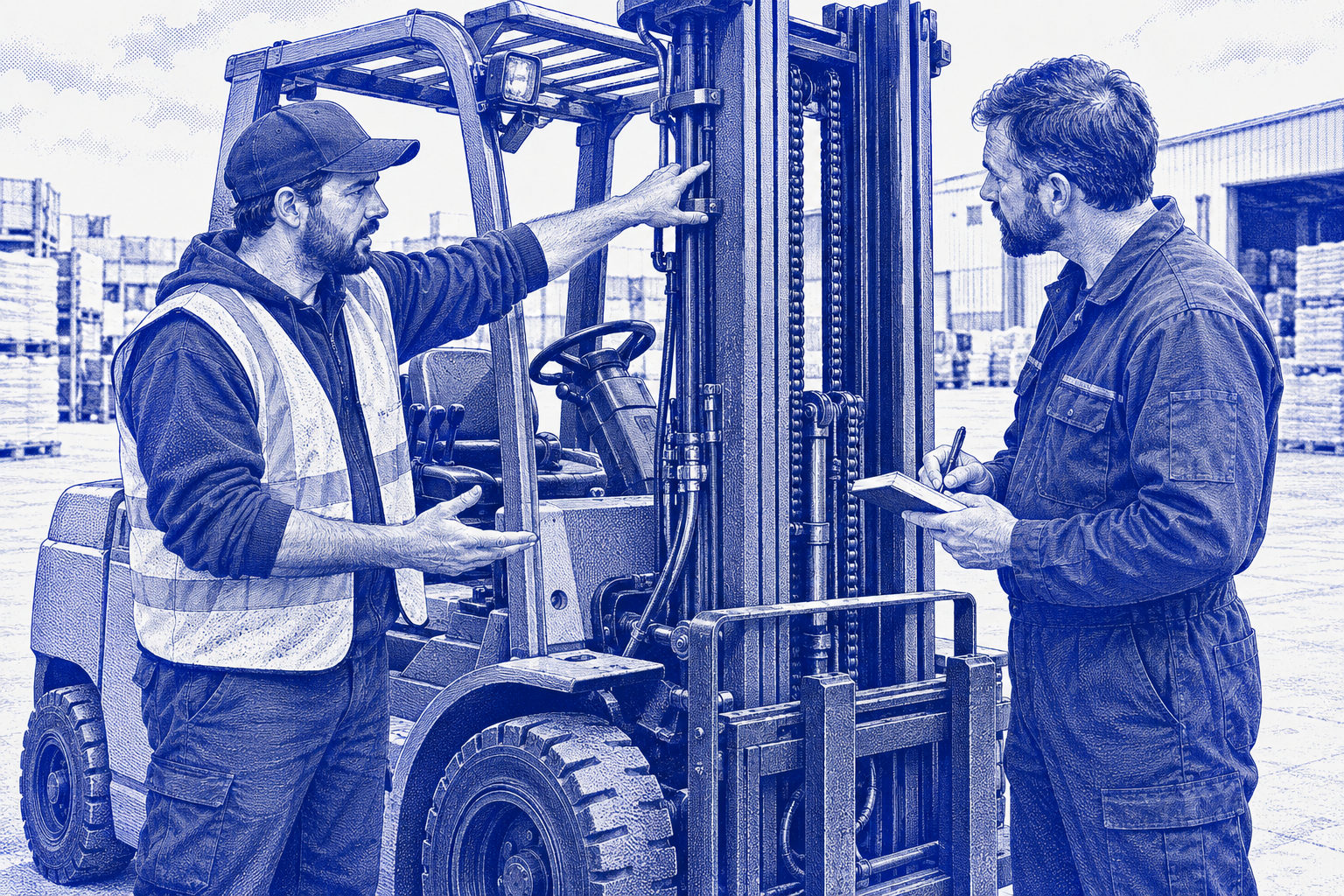
Better version: “Unit DEMO-07, fictional electric counterbalance. Operator reports intermittent loss of function after warming up. Previous job note records a replacement; complaint returned. Exact display message and serial context still need confirmation. Approved procedure available for technician review. Alex owns follow-up.”
The better version does not solve the fault. It tells the reviewer what is known and what still needs to be established. That prevents an incomplete report from looking like a completed diagnosis.
Escalate safety concerns through the real process
OSHA’s powered-industrial-truck requirements address unsafe equipment and authorized repairs. If the report involves a safety concern, follow the employer’s applicable procedure and qualified escalation route. Do not hold it in a marketing nurture sequence or treat an AI assessment as permission to operate.
This article deliberately does not prescribe testing, isolation or repair steps. Those depend on the machine, work conditions, manufacturer guidance and competent review. The intake should support that process without pretending to replace it.
Close the loop after review
When the technician finishes the review, add the actual finding, action, result and any unresolved limitation. Identify who reviewed the note and when. Keep the original report so a later reader can distinguish the initial description from what the work established.
The printable resource provides blanks for these fields. Use it to prepare a real-job demo or improve an existing handoff even if you never buy a copilot.
Sources and context
The primary sources below support the specific statements attributed to them. Worked examples are illustrative assumptions, not industry averages or measured ForkMax results. Labor-market and manufacturing research describe the populations identified in the article.