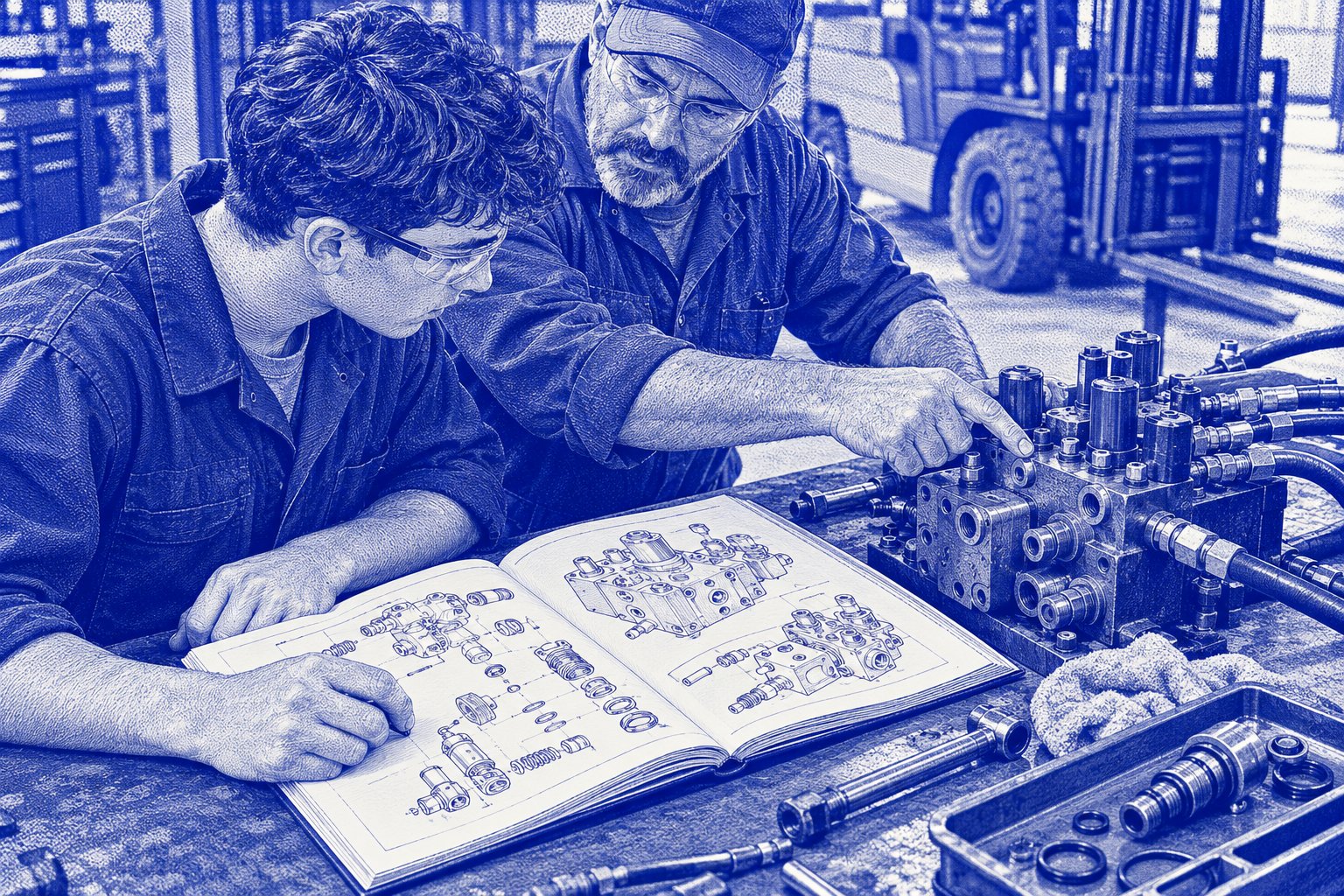
A technician knowledge gap becomes a business risk when useful experience exists only in one person’s memory. A stronger system captures the evidence behind a repair, makes it findable and keeps a qualified person responsible for applying it. The goal is consistent work across the team, including when a senior technician is unavailable or leaves.
Experience is more than a list of fixes
A note saying “replaced the sensor” leaves out the important questions. What symptom was present? What machine and serial variant were involved? Which tests ruled out other causes? What reference applied? Was the repair verified under the conditions that caused the complaint?
Without that context, a new technician may apply the remembered part to a different fault and repeat the very mistake the knowledge base was supposed to prevent. Preserve uncertainty and unsuccessful steps alongside the final result, with a clear distinction between an observation and a theory.
The BLS occupational guide notes that entry-level heavy-equipment workers without formal preparation typically progress over several years, often three to four, before becoming fully qualified. This is broad occupational context, not a forklift certification rule or a claim that software can compress that experience into a few prompts.
Capture one useful case at a time
Begin with a recurring problem the team already understands. Record machine identity, customer complaint, relevant operating conditions, observed codes or symptoms, tests performed, source references and revisions, the confirmed finding, the action taken and the verified outcome.
Assign a reviewer and a review date. If the case has unresolved questions, mark them. If the reference is restricted or outdated, keep that status visible. A knowledge base that hides provenance can make an old error look authoritative.
Use a short, repeatable template that fits the technician’s real workflow. If documentation requires another hour after every job, completion will suffer. A copilot can help organize an account from approved job notes, but the person responsible for the repair should check the final record.
Build retrieval around the current machine
Search should bring back relevant context, not merely a matching phrase. Make, model, serial range, system, symptoms, environment and source version can all affect whether a prior case applies. Where those details are missing, the agent should ask rather than silently fill the gap.
A reviewed case can suggest the next question or a reference to consult. It is not a substitute for the current manufacturer procedure, safe-work process or competent testing. Teach the team to treat a confident-looking answer as something to check against the evidence.
The NIST generative-AI profile discusses risks relevant to AI systems, including unreliable output. For a service operation, that reinforces the need for source context, evaluation and a route to a qualified reviewer. It does not certify ForkMax or prove a repair-time reduction.
Keep expertise when people change roles
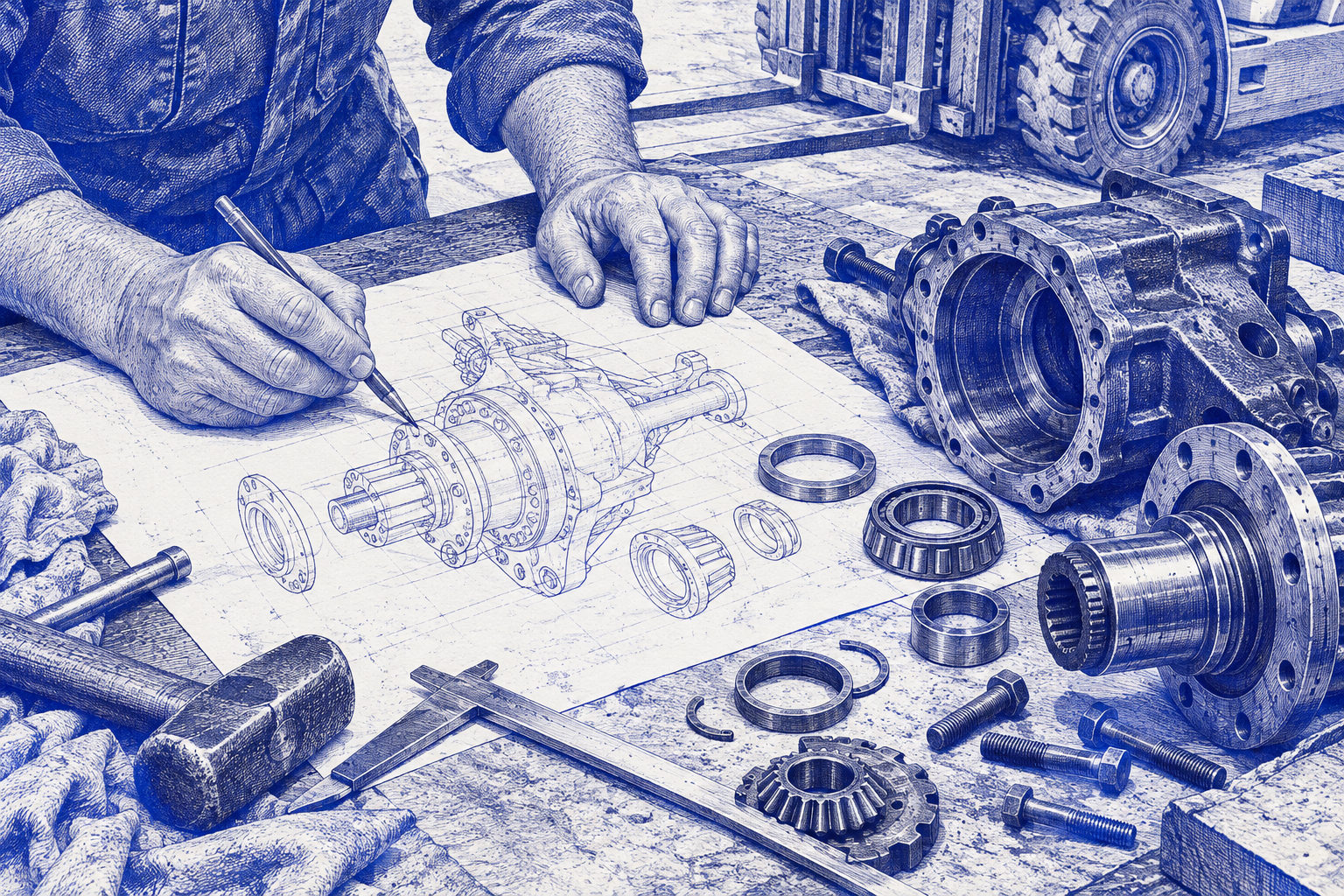
Knowledge retention should be a normal part of completed work rather than an emergency interview when a technician resigns. Capture repeated lessons, revise weak records and make the process part of mentoring. Senior staff can spend more time explaining difficult reasoning and less time answering the same basic retrieval question.
Access should follow role and authorization. A departing employee’s account should lose access without making the organization’s reviewed, lawfully retained job records disappear. Equally, the business should not assume it owns every manual, message or externally licensed document that an employee could access.
Customer-specific retrieval and shared model training are different uses. ForkMax’s privacy terms and the customer agreement define which records may support a dedicated knowledge base and which, if expressly authorized, are eligible for broader improvement. The right to read a source is not automatically the right to train a shared model on it.
Measure capability without gaming the numbers
Track time spent finding an applicable reference, repeated questions, same-fault comebacks, wrong-part events and the completeness of reviewed case records. Review the quality of escalations: does a technician present what is already known, or does the senior person still have to reconstruct the entire job?
Compare similar work and explain changes in the team or equipment mix. A junior technician becoming faster on familiar tasks may reflect mentoring, repetition, better intake and the tool together. Do not attribute every improvement to one system without a reasonable comparison.
Use findings to improve training. If many cases stop at the same missing skill, provide practical instruction. If the issue is a stale document or unclear search label, improve the knowledge process. Information access and hands-on competence should reinforce each other.
A knowledge base needs review.
Common questions
What should a forklift repair knowledge base contain?
Reviewed machine context, symptoms, relevant sources, tests, confirmed findings and verified outcomes. It should also preserve uncertainty, source restrictions and the identity of the reviewer.
Does documenting senior knowledge make every technician equally skilled?
No. It gives more people access to useful information and can improve consistency. Practical skill, experience, training and qualified judgment still differ and need support.
Where should a dealer begin?
Choose one recurring job type, build a concise reviewed-case template and test retrieval against real questions. Explore Tech Copilot or bring a workflow to a demo.
Sources and context
The primary sources below support the specific statements attributed to them. Worked examples are illustrative assumptions, not industry averages or measured ForkMax results. Labor-market and manufacturing research describe the populations identified in the article.