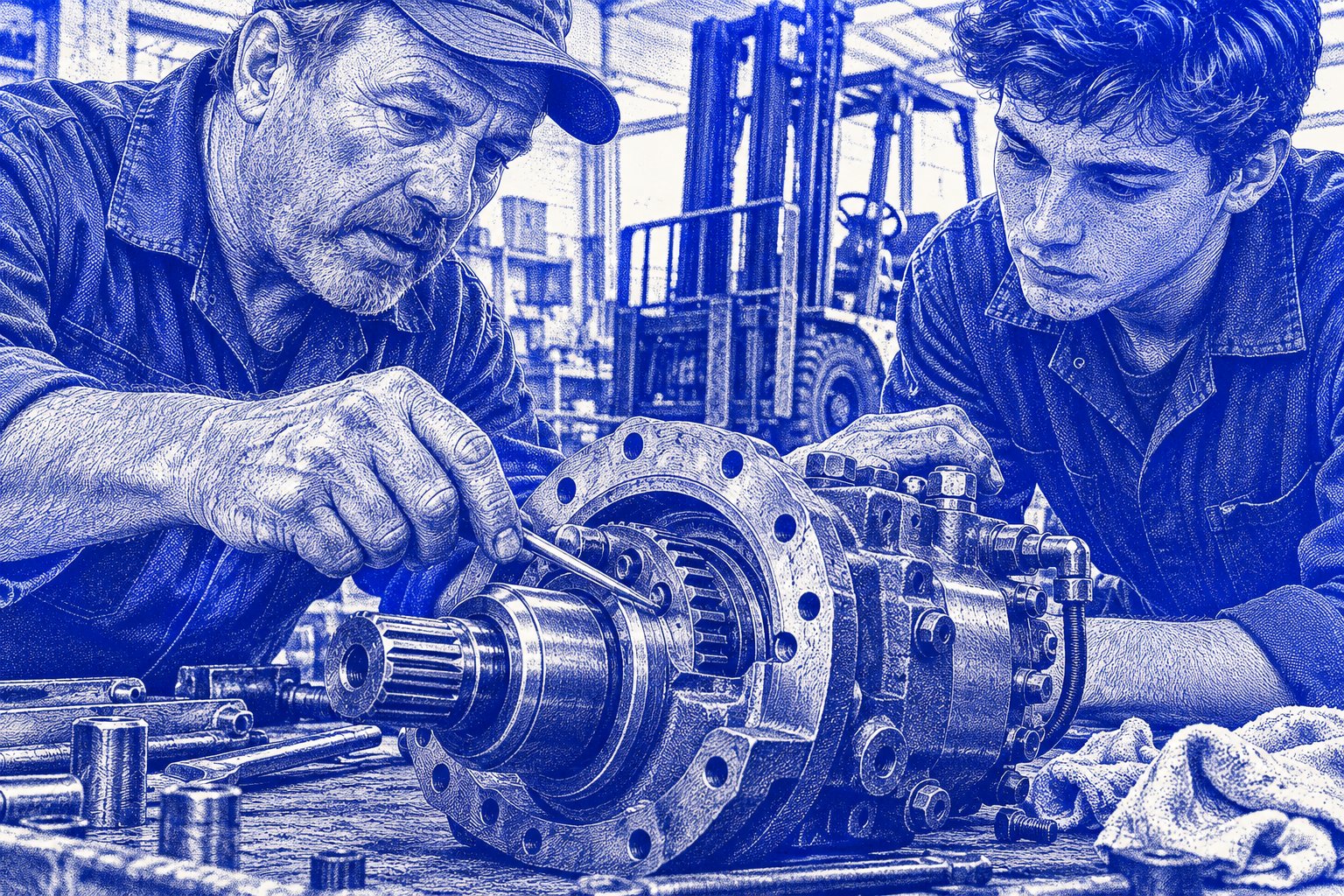
To retain service knowledge, preserve a short reviewed case record with machine context, the reported condition, the applicable source, the technician’s finding and any remaining uncertainty. A transcript alone is not a reliable knowledge base. Someone needs to decide what the record actually establishes.
This matters when the person who remembers an unusual job is away, working elsewhere or simply too busy to repeat the story. The goal is not to turn every conversation into permanent truth. It is to make approved, relevant context retrievable by the people allowed to use it.
Raise the whole team’s starting point
When useful knowledge lives only with a senior technician, the rest of the team has to wait for access to that person. A reviewed case base gives newer technicians a stronger starting point and reduces repeat interruptions for experienced colleagues.
The purpose is more consistent diagnosis and repair quality, including when a technician leaves the business. Keep the confirmed fix and its machine context, so experience becomes something the company can use again rather than a story one person remembers.
Capture the case after review
A useful note distinguishes the initial report from the result of the work. Include the machine’s identity or authorized serial context, date, issue and relevant operating circumstances. Reference the source actually used and identify the technician who reviewed the finding.
Record the action and observed outcome without silently upgrading “customer reported improvement” into “fault conclusively resolved.” If follow-up remains, name the owner and next step. A limitation retained today can prevent a misleading conclusion later.
Keep source versions attached
A case can outlive the document, software revision or machine configuration that informed it. Keep enough source identity to let a later reviewer check applicability. Where permitted, link to the controlled source rather than creating uncontrolled copies.
Toyota’s official manual-access guidance is equipment-specific. In practical terms, a retained record should tell the next technician which machine and reference were involved, rather than inviting them to generalize from a vague model family.
If the source is later withdrawn or superseded, the case should remain historical evidence of what was reviewed at the time. It should not automatically remain recommended guidance for new work.
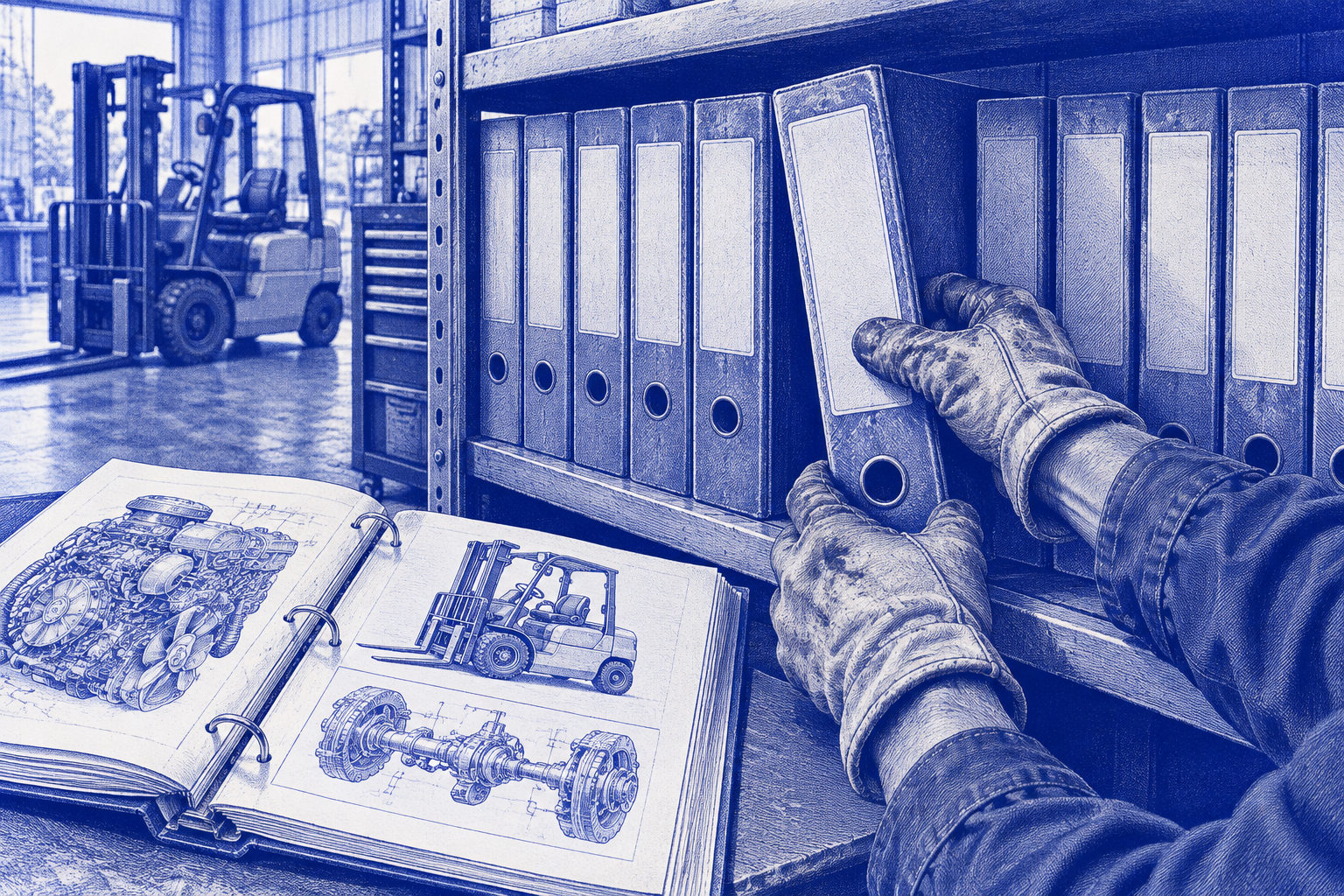
Distinguish memory from authority
An AI system may retrieve a previous case because the wording is similar. Similarity does not establish the same fault, configuration or appropriate action. Present the old case as context that requires comparison with the current job.
NIST’s AI risk framework emphasizes evaluating the system in its actual context of use. Applied here, a retrieval feature should be evaluated for both useful matches and inappropriate ones. A confident match to the wrong machine is a failure even when the old record itself is accurate.
A compact record template
- Case identity: date, site unit and permitted machine identifiers.
- Initial report: who described what happened and under which conditions.
- Evidence: reviewed observations, with method and source where appropriate.
- Reference: document, revision and machine applicability.
- Decision: the qualified reviewer’s finding and approved action.
- Outcome: what was observed afterward and how it was checked.
- Limits: unresolved questions, exceptions and follow-up owner.
- Access: who may see the case and which attachments may be shared.
This structure can live in an existing service system. It does not require collecting every message, recording every worker or building a surveillance archive.
Retain the reviewed result.
Establish correction and ownership
Decide who can approve a new case, correct an existing one and retire a misleading record. Preserve a clear amendment history so the reader can distinguish the original finding from a later correction.
Ownership should also cover imported material. A private customer document may be usable for a specific service task without being suitable for general staff access. The knowledge workflow needs a permission decision, not just a search index.
When a worker leaves, access to the system should be reviewed through the business’s real account process. A vendor’s claim that “knowledge stays” does not establish lawful ownership of every document or conversation.
Search in ways technicians actually work
Useful retrieval starts with the machine, symptom, relevant conditions and prior work. Allow the reader to inspect why a case was returned. A result list should expose its machine context, date, source and review status before someone relies on it.
Test both direct and imperfect queries: an exact unit identifier, a symptom phrased differently, a similar machine with a different configuration, and a job that has no appropriate match. “No reviewed case found” is a valuable answer when it is true.
Avoid the archive trap
More retained text is not automatically more usable knowledge. Unreviewed conversation fragments, duplicate imports and obsolete drafts can crowd out the relevant record. Define a review cadence and a deletion or retirement process before the collection grows.
Keep a distinction between operational history that must be retained under the business’s requirements and suggestions that should never have become authoritative. Confirm retention responsibilities with the people who own those systems.
Test a real handoff
Ask an authorized technician who did not work on the original job to read a sample case. Can they identify what happened, what the source supported and what remains uncertain? Can they find the owner of an unresolved question?
That practical test often reveals more than a count of documents indexed. ForkMax’s knowledge demonstration uses a fictional record to show the structure; your own permissioned case is the right material for evaluating a real deployment.
Sources and context
The primary sources below support the specific statements attributed to them. Worked examples are illustrative assumptions, not industry averages or measured ForkMax results. Labor-market and manufacturing research describe the populations identified in the article.