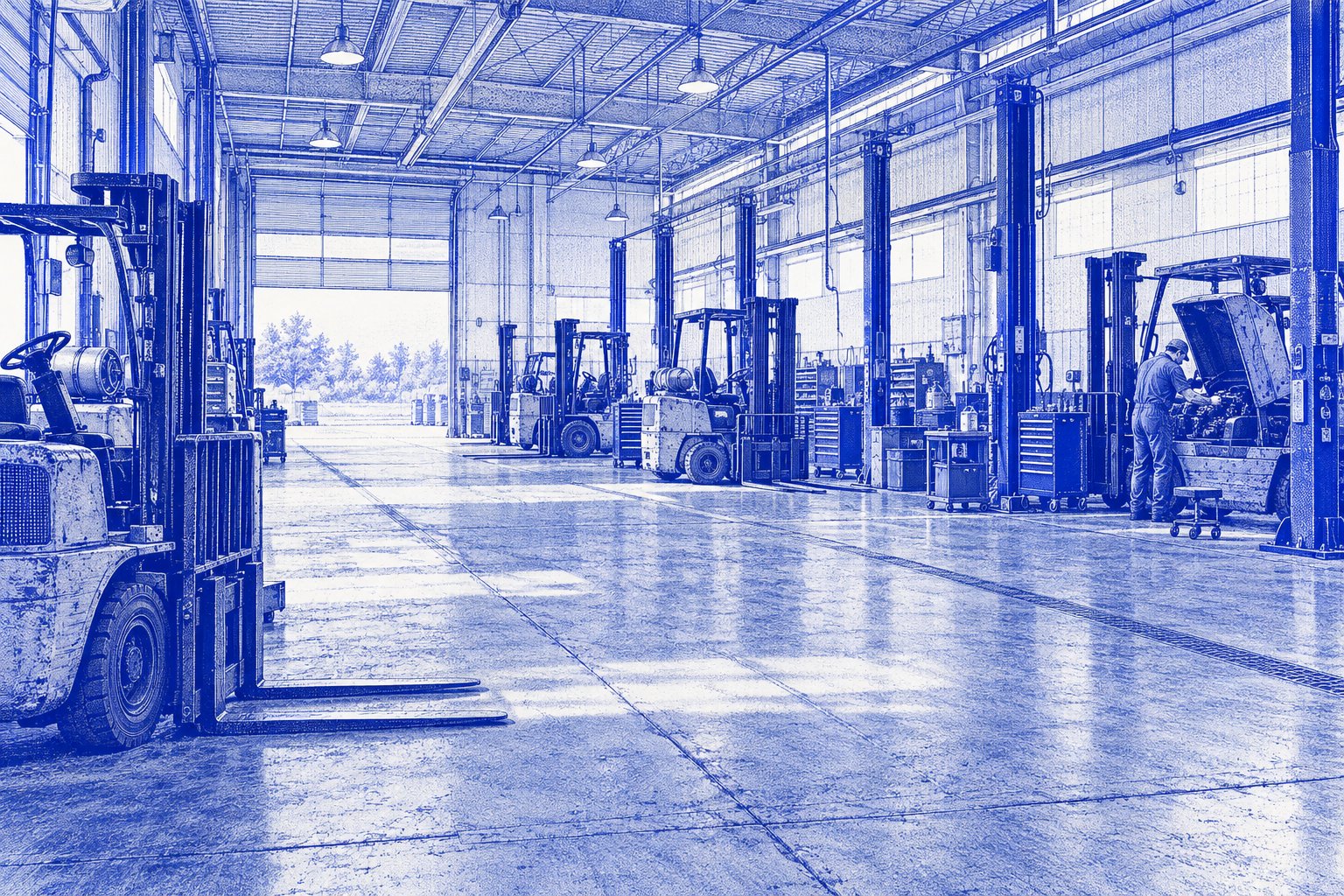
A forklift dealer’s technician shortage is often both a hiring problem and a usable-capacity problem. Recruiting remains important, but avoidable repeat work, missing knowledge and coordination gaps can consume the time of people already on the payroll. Measure both before deciding what another hire or an AI agent could change.
What current labor data does and does not show
The U.S. Bureau of Labor Statistics projects 7% employment growth for heavy vehicle and mobile equipment service technicians from 2025 to 2035, with about 20,300 openings per year. Many openings reflect replacement needs as people change occupations or leave the workforce.
That is a broad occupation group, not a count of unfilled forklift-technician vacancies. It does not establish a national forklift shortage percentage or predict how long a Las Vegas dealer will take to hire. Use local recruiting data, applicant capability and your own time-to-fill alongside national context.
The operating question is specific: which capability is missing, on what equipment, in what territory, during which working hours? A general headcount target can hide the need for a specialist, a stronger training process or better preparation before dispatch.
Separate demand from lost capacity
Start with the jobs you could serve profitably if the right capacity were available. Record declined work, extended lead times and work sent to subcontractors. Then examine diagnostic rework, unnecessary return visits, avoidable travel and time spent reconstructing job information.
Do not assume all non-billable time is waste. Training, safety checks, tool maintenance, customer communication and legitimate diagnosis support the quality of the service. A utilization target that discourages those activities can damage the business.
For a simple fictional example, four technicians recovering 20 usable minutes per day over 20 working days would create 26.7 hours of potential capacity. That does not equal another full-time technician. Only part may become paid work, depending on demand, routing and skill fit. Treat it as an operating scenario, not a hiring substitute.
Give newer technicians access to reviewed experience
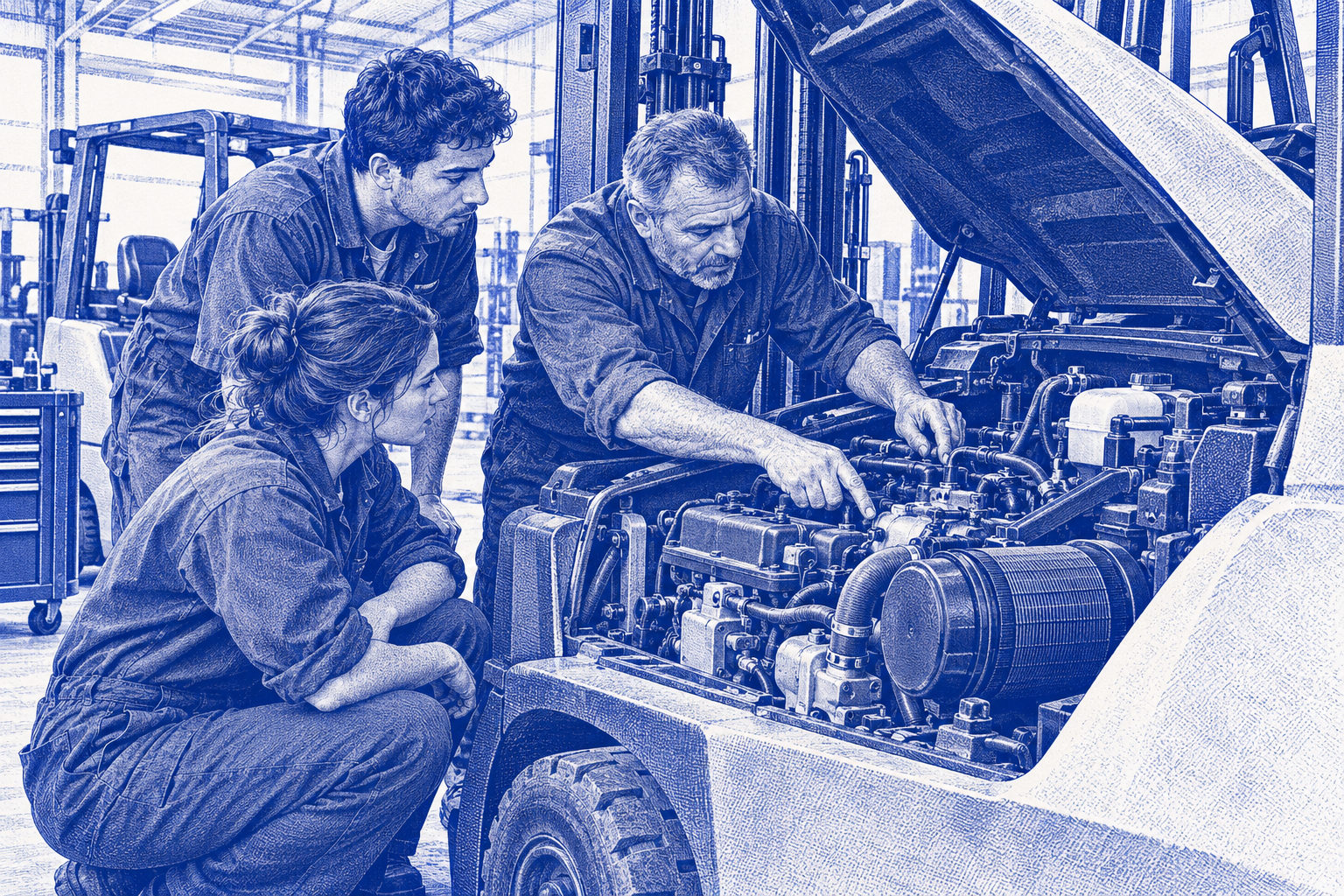
A senior technician may know which questions to ask, which reference revision matters and why a familiar symptom can have several causes. That experience is valuable partly because it is contextual. Copying a list of previous fixes without the tests and machine details can spread the wrong lesson.
A knowledge-retention workflow should preserve observations, evidence, confirmed findings and outcomes. Give people a way to find reviewed cases while showing where the present machine differs. Keep source permissions and document revisions visible.
Tech Copilot can help locate that information and organize a question. It does not turn an unqualified worker into a qualified technician or remove the need for practical mentoring. The useful ambition is to reduce repeated searching and interruptions while supporting a better testing process.
Protect senior-technician time
Log the recurring questions that interrupt your most experienced people. Some will become useful reference material. Others reveal a training gap or a workflow that fails to capture the basics at intake. A repeated request for the same serial number is a process issue; a complex intermittent fault may legitimately require expert attention.
Create an escalation rule that distinguishes the two. Routine retrieval can be handled by the system. Uncertain diagnoses, safety issues and specialist procedures should reach the right qualified person with a concise record of what is already known.
Measure expert interruption time and the quality of the escalations, not just how many questions an agent answers. A wrong confident answer that avoids an interruption temporarily can create more work later.
Put the rest of the business around the technician
A good diagnosis can still stall while someone waits for a quote, tracking update or appointment confirmation. The connected Tech, Parts and Admin workflow is intended to keep those tasks moving without asking the technician to become the coordinator for every department.
The dealer sets purchasing and communication rules. Parts handles the approved supplier process, and Admin coordinates the next step using the actual order and job context. That helps technical staff stay focused on the work that needs their skill.
Evaluate a pilot using comparable jobs, repair quality, repeated labor, service lead time, supervisor time and additional contribution actually realized. Continue recruiting and training where the capability gap remains. Useful technology can strengthen the team; a staffing plan still needs real evidence.
Match support to the job.
Common questions
Is there a verified national forklift-technician shortage figure?
The BLS source used here covers a wider occupational group and projects openings, not a forklift-only shortage. This article does not turn that figure into an unsupported vacancy estimate.
Can AI replace an experienced forklift technician?
A copilot can organize and retrieve information, but it does not perform the physical work or supply a person’s demonstrated competence, judgment and accountability. Evaluate it as support for a qualified team.
What should a small dealer measure first?
Measure the jobs waiting for a specific skill and the avoidable hours consumed by repeat work or coordination. That separates a true capacity gap from an information or scheduling problem.
Sources and context
The primary sources below support the specific statements attributed to them. Worked examples are illustrative assumptions, not industry averages or measured ForkMax results. Labor-market and manufacturing research describe the populations identified in the article.